Worcester Tree Trim and Removal
Menu
Planning Tree Planting? Do Stump Grinding First
Stump Grinding Worcester
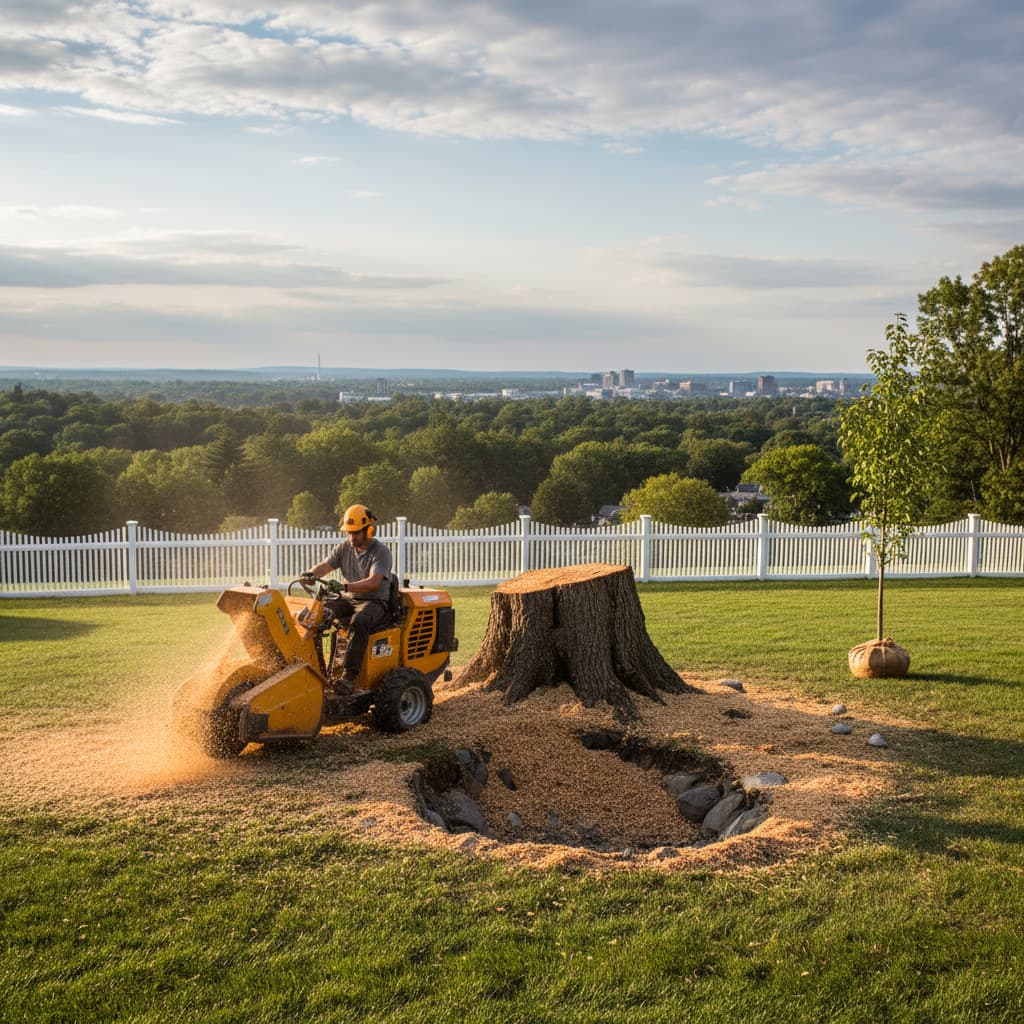
When Worcester homeowners begin planning new landscaping projects around Green Hill Park or in the tree-lined neighborhoods near College of the Holy Cross, they often focus on selecting the perfect tree species and location. However, experienced property owners know that successful tree planting starts underground, specifically with professional stump grinding to prepare the site properly.
Why Stump Grinding Matters Before New Plantings
Why you need to do stump grinding to help your new plants grow.
Stumps of trees that were taken out before can be a big problem when trying to plant new trees. Many things can keep new plants from growing well, including the way the soil behaves and what kind of problems can happen to roots, even if they are not visible above the ground for many years.
Tree Roots Compete for Space
The root system of old trees does not disappear after the tree has been cut down. It stays alive underground for many years, creating a tangle of roots that can interfere with a new tree getting a good anchor into the soil. This creates a big problem for trees in Worcester, which are generally planted in very heavy clay soils such as Crown Hill Piedmont and East Side Neighborhoods.
Wind Damage to Trees
If new trees cannot get a strong, deep root system, they will be at risk for being knocked over by high winds during New England storms. Trees that line the campus of Holy Cross University are a good example of why the right rooting system is important and why that rooting system cannot work if there is competition from other root systems in the soil.
Competition for Nutrients and Problems with Soil Health
Trees that have died continue to take up water and nutrients from the surrounding soil even as they decompose. As a result, new plantings will have to fight for available nutrients in the soil, at a time when they are most vulnerable. In addition, the decomposition of old stumps can cause changes in the chemical composition of the soil, which makes it hard for new trees to survive.
Wood Chips Made From Grindings Are Valuable for Soils
Grindings made from the stump grinding process can be turned into wood chips that can be used as mulch and/or added to the soil. When done correctly, adding wood chips can improve the structure and organic matter of the soil, which can be critical in Worcester’s urban environments, where soil compaction and lack of nutrients are common.
Reduced Risk of Diseases and Pests
Urban forests in Worcester face a number of threats from different types of diseases and pests. Dead stumps can serve as a habitat for pathogens that survived from the original tree, providing a conduit for infection to new plantings. Given the current efforts by the Massachusetts Department of Conservation and Recreation to protect Worcester’s urban forest canopy, through programs such as Greening the Gateway Cities, reducing the risk of disease infection is particularly important.
How Common Is Disease Transmission Through Stumps?
Any type of pathogen (bacteria, fungi) that can infect trees can use dead stumps as a place to reproduce. Where trees are planted closely together (as in the densely populated neighborhoods of downtown Worcester, or near the DCU Center), disease transmission can quickly move from one tree to another via their roots or soil contact.
Reducing the Risk of Disease Infection in New Plantings
Removing stumps reduces the risk of disease infection and allows the owner to treat and amend the soil before planting new trees. Preventative measures now will be much less costly than treating infected trees years later.
Advantages That Improve Success with New Plantings:
Stump grinding is beneficial for new plantings in several ways:
Access to Soil for Improved Preparations
The physical barrier of a stump removed by grinding gives the property owner better access to prepare the soil. He/she can now add amendments to the soil, improve drainage, and create the exact soil conditions needed for his/her new tree(s). This is particularly helpful in Worcester because of the variety of terrains throughout the city, from the drained slope of Bancroft Tower to the clay soils found throughout the city.
Ability to Use Large Equipment
It can be difficult to position large equipment required for planting in the same location as a large stump. A professional tree service can position the necessary equipment to properly plant the new trees, especially large trees that can make a positive impact on the property immediately.
Timing Considerations for Worcester Planting Projects
In order to establish trees prior to winter stress, planting in Massachusetts needs to be timed properly. Both spring and fall plantings can be successful with the right preparations. However, the sooner you can perform stump grinding, the longer the time available to allow the soil to settle and for amendments to integrate into the soil.
Timeline for Preparing Your Soil After Stump Grinding
After stump grinding, wait at least 2-4 weeks before planting to allow the soil to settle. This allows enough time to remove any excess wood chips, add new topsoil, and incorporate organic amendments that will aid in the growth of the new trees. Wood chips can be used as mulch around newly planted trees, but the area of the planting hole should be free of them.
For spring plantings, Worcester Tree Trim and Removal recommends performing stump grinding in the late winter/early spring, so that you have plenty of time to prepare the soil for planting and take advantage of the optimal planting season.
DIY vs. Professional Stump Grinding
Some property owners think about renting stump grinding equipment themselves. While rental is possible, using a professional service for stump grinding offers significant benefits:
Safety and Expertise
Operating stump grinding equipment safely is a skill that takes experience. Because Worcester has many older neighborhoods with a large amount of underground utilities, safety is a major concern. Professional services have the proper insurance and knowledge of the local utility marking regulations, and therefore protect the property owner from liability and costly errors.
Full Service Site Preparation
A full-service professional stump grinding company will clean up the site completely and prepare it for new planting. This includes removing the correct amount of wood chips, leveling the area, and identifying any additional root systems that may cause problems with the new trees.
Experience Also Provides Depth of Grinding
Professional stump grinding companies know how to grind the stump to the correct depth, typically 4-6 inches below grade, thereby ensuring the total removal of the stump without having to dig excessively large holes that can complicate replanting efforts.
Selecting New Plantings After Stump Grinding
Once the stump has been professionally removed, property owners can choose new trees that will grow well in Worcester’s climate and conditions. Property owners should consider factors such as the mature height of the tree, its root spread, and whether the tree will have any interest seasonally. If the new trees are going to be planted near historical buildings or in small urban lots (common in many parts of Worcester), selecting native species can provide the best chance for long-term success and low maintenance.
Native Species Provide Best Long-Term Results
Native species of trees are generally the best choice for long-term success and low maintenance, and are supportive of the local wildlife population. Native species include trees like red oak, sugar maple, and white pine, which have demonstrated success in Worcester’s climate and soil conditions.
LATEST POSTS